Disciplinary Literacy: Reading Beyond English Class and into History

Updated: Mar 8
The skill of literacy doesn't just stop at elementary school. As students transition to secondary school, they have to take the skills that they learned and build on them. They need to learn how to engage with texts in a way that helps them understand it. In this post, we will dive deeper into disciplinary literacy-- how readers can take any kind of text, whether that is a science research journal or a historical point of view, to change it from something that may not interest them into something useful. Disciplinary literacy asks that the students take on new texts with the perspectives of a mathematician, scientist, or historian in mind.

What Is Disciplinary Literacy?
Reading texts in secondary education requires more than just comprehension and vocabulary knowledge. In secondary education, students are often required to analyze texts, evaluate arguments, and synthesize information from various sources and forms of media. They are expected to apply critical thinking to what they have read and express their thoughts in a clear and effective manner, an ability that is essential for writing essays, participating in class discussions, and conducting research. When students are asked to think, read, and write like the experts in the content area, they develop more skills necessary to engage in rigorous, critical thinking tasks.
Disciplinary Literacy Skills in HISTORY
Now, put yourself in the shoes of a New York high school history teacher. You have to find a way to teach the content objectives as well as developing disciplinary literacy skills in your students as you also teach the vocabulary and language objectives. You want to teach about King Henry VIII's reign in England. If you just read a textbook and provide background knowledge, you already lost the engagement of your students.
Think Like a Historian
A historian needs to be able to read a document and conduct an analysis on the different perspectives both accounted and unaccounted for, what happened, when, and why. They need to be able to analyze and identify primary and secondary sources or what an author is claiming. A successful historian asks questions, such as "How do these past events connect to and inform the present?" You want your students to be able to access these skills to be successful in your class. They need to see themselves as historians too, that they are capable of analyzing texts and can explain how one event led to another.
The Standards You Want To Address
The study of world history requires an understanding of world cultures and civilizations, including an analysis of important ideas, social and cultural values, beliefs, and traditions. This study also examines the human condition and the connections and interactions of people across time and space and the ways different people view the same event or issue
from a variety of perspectives. (2.1)
Establishing timeframes, exploring different periodizations, examining themes across time and within cultures, and focusing on important turning points in world history help organize the study of world cultures and civilizations. (2.2)
The skills of historical analysis include the ability to investigate differing and competing interpretations of the theories of history, hypothesize about why interpretations change over time, explain the importance of historical evidence, and understand the concepts of change and continuity over time. (2.3)
-----------------------------------------------------------------------------------------------------------------------
Strategies for Enhancing Literacy Skills
First, let's pick a more engaging book that could interest my students that would teach them about King Henry VIII's reign during the Tudor England period. We want to find a book that complements the standards. You should still provide background knowledge and general historical information about this topic; but by finding a book to pair with the curriculum increases student engagement. The text I would choose is Brazen by Katherine Longshore, a narrative historical nonfiction text that highlights women who challenged social and political norms across different historical periods.
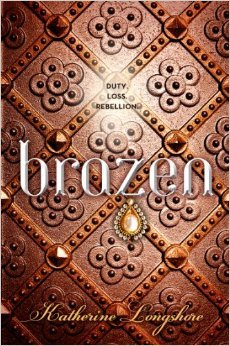
Brazen by Katherine Longshore
Differentiating Across Multiple Entry Points
All students are different, unique learners. Specifically, in a New York high school classroom, there is a wide range of reading and literacy levels in one class. To support a diverse classroom, here are some ways I would give students access to the text in a way that would further their understanding:
Language and Structure Support
Pre-teach Tier 2 and Tier 3 vocabulary: Although this reading is a narrative piece, it would be beneficial to explicitly teach content vocabulary that is relevant to this reading, such as patriarchy, imperialism, etc. This can be done with a word wall or Frayer models.
Provide chunked excerpts with guiding questions that focus on one historical skill and literacy skill at a time (context, cause/effect, or perspective)
Modeling: As I am reading aloud, I will use expression to keep readers engaged. I can also select some high-level readers to read aloud as the rest of the class follows along and takes notes.
Visual Aids & How Students Can Use Them
These tools support students who struggle with abstract chronology and allow visual learners a concrete entry point.
Timeline strips: Students add the figure(s) from Brazen alongside major world events
Maps: Trace where the character lived, traveled, or influenced events
Image sets: Paintings, political cartoons, artifacts from the era
**Structured Annotation & Graphic Organizers: The main strategy I would implement is using structured annotation with symbols and graphic organizers, which can help students organize their thoughts and improve comprehension by identifying claims, historical evidence, and historical context as they are reading. Reading with an annotation task can also increase engagement and understanding.
To help students “read like historians,” I would explicitly model thinking aloud as I am reading aloud:
Sourcing: Who is telling this story? When was it written? Who is the intended audience?
Contextualization: What was happening socially and politically during this woman’s life?
Corroboration: How might this account differ from a traditional textbook portrayal
Students would annotate the text using symbols (⭐ claim, ✅ evidence, ❓questions), reinforcing that historical texts are merely someone's interpretation of the event. Many historical texts don't even include all perspectives of the event.
This can be done while reading each chapter or excerpt as a class or as turn and talks.


Anchor Charts would be posted and used throughout the lesson.
References
Beerer, K. (n.d.). Developing Disciplinary Literacy Across Core Subjects. Discovery Education. Retrieved February, 2026, from https://www.discoveryeducation.com/blog/teaching-and-learning/developing-disciplinary-literacy-across-core-subjects/?utm
Education Week. (2024). Teaching Content and Supporting Reading Through ‘Disciplinary Literacy’. YouTube. https://www.edweek.org/teaching-learning/video-teaching-content-and-supporting-reading-through-disciplinary-literacy/2024/10?utm
The University of the State of New York. (2014). New York State Common Core Social Studies K-12 Frameworks. https://www.nysed.gov/sites/default/files/sslearn.pdf
Written by Teagan Ka
2026


Comments